
Skincare · 4 min read
Brown spots, explained: why they come back, and how to keep them calm
That brown spot on your cheek is your skin trying to protect you. Here is why sunscreen alone isn’t enough, when to protect your skin in Victoria, and what to look for in a brightening serum.

That brown spot on your cheek? It’s your skin trying to protect you. Once you understand how a spot forms, it is much easier to understand why some come back every summer, and what actually helps.
What a brown spot is
Deep in your skin, you have cells called melanocytes. When the sun or heat hits your skin, they make pigment, melanin, like a little umbrella over your cells. After years of sun, some melanocytes get stuck in “on” mode. They keep making extra pigment in the same place, and that is a brown spot.
Not every spot is the same
Sun spots, the marks left after a breakout, and melasma, which is linked to hormones, can all look alike. But they don’t all need the same care. Melasma in particular needs a gentler plan, which is why we always look at your skin together first.
Why sunscreen alone isn’t enough
Sunscreen is a must. It is the best anti-aging product there is, and it protects you from skin cancer. Never skip it. But your melanocytes don’t only react to UV. Heat and visible light wake them up too, and sunscreen doesn’t block all of that. That is why spots can show up even when you are careful.
Sunscreen needs a partner: a serum that calms your melanocytes.
In Victoria: May to September
From May to September, the sun here is strong enough to wake up your melanocytes. That is when I tell my clients to calm them down. Every morning: your brightening serum, then your sunscreen. Every day, even when it’s cloudy. Going somewhere warm this winter? Start your serum at least a week before you leave, and keep it up the whole trip.
What to look for in a brightening serum
- Ingredients that calm the melanocytes, like alpha-arbutin and kojic acid. They slow down tyrosinase, the enzyme your skin uses to make pigment.
- Gentle acids, like lactic, salicylic and glycolic acid, that lift the pigment already on the surface.
The iS Clinical Brightening Serum has both, with no hydroquinone. In iS Clinical’s own words, it helps improve the appearance of uneven skin tone and pigmentation. Three or four drops on your face and neck, then sunscreen. A little tingle is normal.
And for the spots you already have
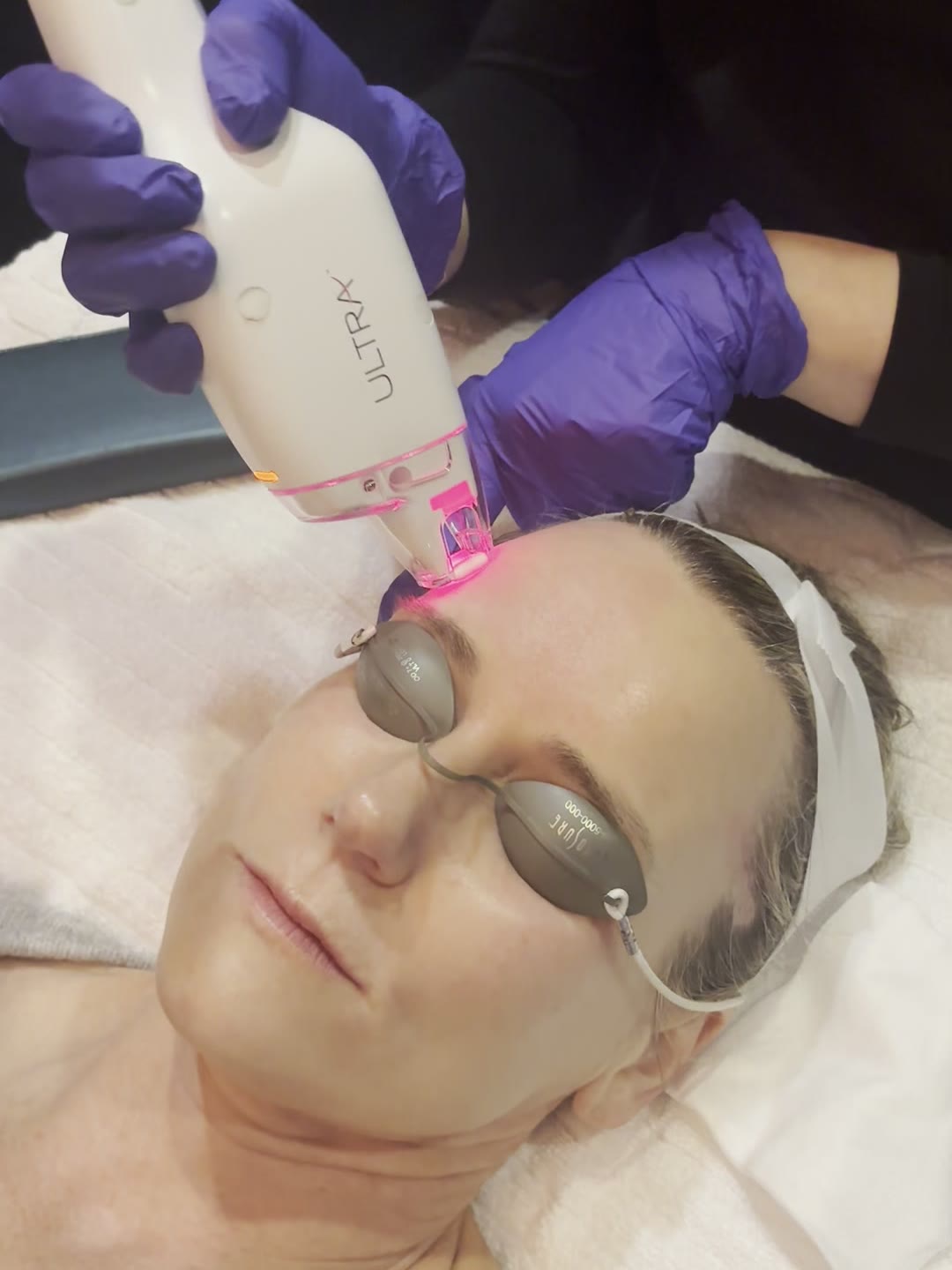
A serum helps keep new spots calm. For the ones already there, fall and winter are the best time for the Ultra, when the sun is low. Then your serum and sunscreen protect your results all summer. Wondering how it compares with needles? Read Microneedling or the Ultra?
Individual results vary.
Not sure which kind of spot you have? Book a free 30-minute consultation. I’ll look at your skin and build your routine with you.